A wheelchair ramp is often the first and most important home modification for someone with limited mobility. Without one, even a single step at the front door can make leaving the house impossible.
This guide covers everything you need to know to choose, install, and maintain the right ramp for your home.
ADA Slope Requirements
The Americans with Disabilities Act (ADA) sets clear guidelines for ramp construction. While ADA technically applies to commercial and public buildings, residential ramps should follow these standards for safety:
- Maximum slope: 1:12 ratio (one inch of rise for every 12 inches of run). For example, a 24-inch rise requires a minimum 24-foot ramp.
- Minimum width: 36 inches between handrails
- Landings: A flat landing at least 60 inches long at the top and bottom of every ramp, and at every turn
- Handrails: Required on both sides, 34 to 38 inches high
- Edge protection: A raised edge or curb to prevent wheels from slipping off
Types of Wheelchair Ramps
Modular Aluminum Ramps
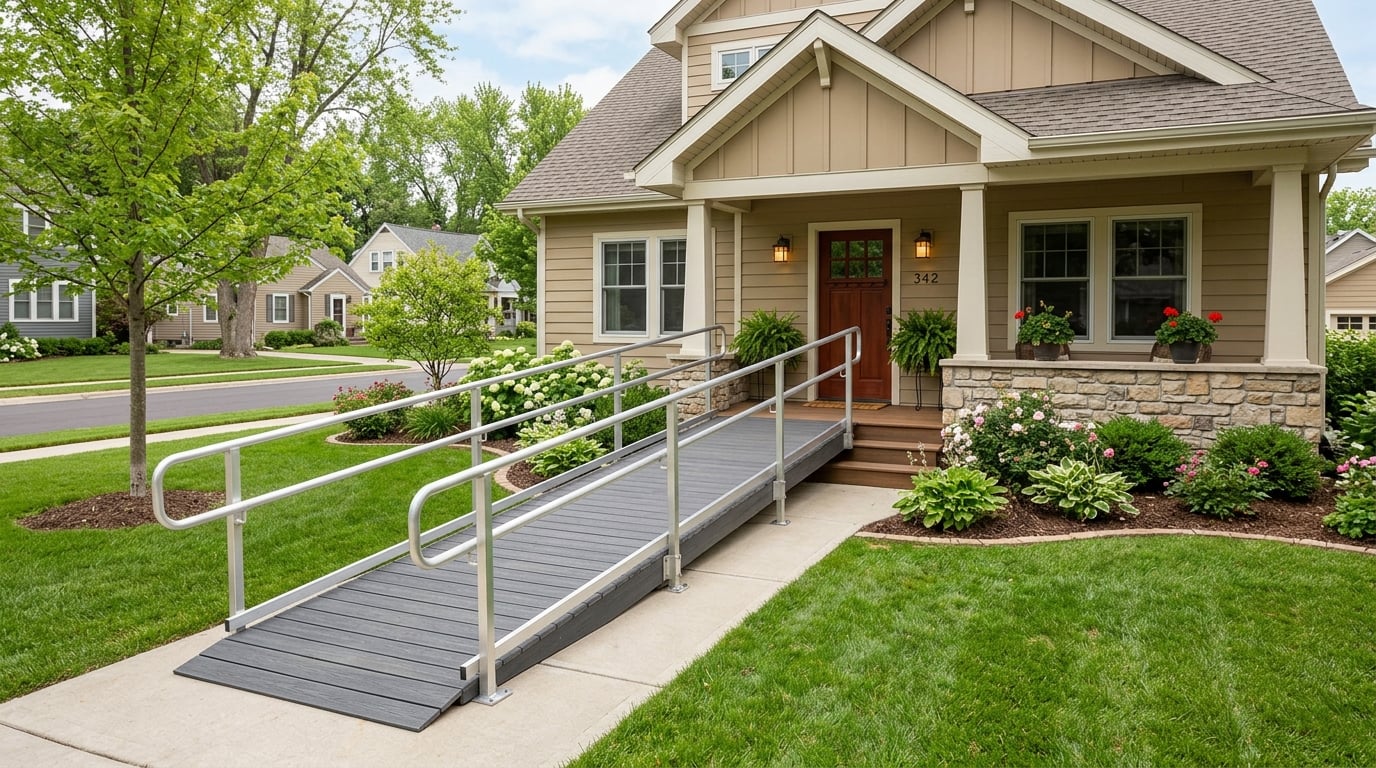
Pre-fabricated aluminum sections that bolt together on-site. They are lightweight, rust-proof, and can be reconfigured or relocated if needs change. Most modular ramps can be installed in a single day without concrete work.
Cost: $100 to $200 per linear foot installed
Best for: Renters, temporary needs, or situations where the ramp may need to move
Wooden Ramps
Custom-built from pressure-treated lumber. Wooden ramps can be designed to match the home's architecture and painted to blend with the exterior. They require periodic maintenance (staining, sealing) but offer the most aesthetic flexibility.
Cost: $75 to $150 per linear foot installed
Best for: Permanent installations where appearance matters
Concrete Ramps
The most durable option, poured concrete ramps are permanent fixtures. They require no maintenance beyond occasional sealing but cannot be removed or adjusted once installed. Construction requires excavation and curing time.
Cost: $150 to $300 per linear foot installed
Best for: Permanent, high-traffic situations
Threshold Ramps
Small, portable ramps designed to bridge a single step or door threshold (typically 1 to 6 inches high). Made from rubber, aluminum, or composite materials, they require no installation and can be moved as needed.
Cost: $30 to $300 depending on height and material
Best for: Minor elevation changes, interior doorways
Permits and Building Codes
Most municipalities require a building permit for permanent ramp construction. The permit process typically involves:
- Submitting a site plan showing the ramp location and dimensions
- Ensuring the ramp meets local building codes (which often mirror ADA standards)
- A post-construction inspection
Modular and portable ramps generally do not require permits, but check with your local building department to be sure. A qualified contractor will handle the permit process for you.
Maintenance Tips
- Aluminum: Hose off dirt and debris monthly. Check bolt connections twice a year.
- Wood: Apply a water-resistant stain or sealant every 2 to 3 years. Check for rot, splintering, or loose boards seasonally.
- Concrete: Apply a concrete sealer every 3 to 5 years. Repair cracks promptly to prevent water damage.
- All ramps: Keep surfaces clear of leaves, snow, and ice. Add non-slip tape or coatings if the surface becomes slippery.
Choosing the Right Ramp
Consider these factors when deciding:
- Rise height: How many inches does the ramp need to cover? This determines the minimum length.
- Available space: A 30-inch rise needs 30 feet of ramp at a 1:12 slope. Switchback configurations can fit in smaller spaces.
- Permanence: Will you need the ramp long-term, or is it for temporary recovery?
- Budget: Modular aluminum offers the best balance of cost, durability, and flexibility for most homeowners.
- Climate: In snowy areas, consider heated ramp mats or materials with good traction when wet.
Get Expert Help
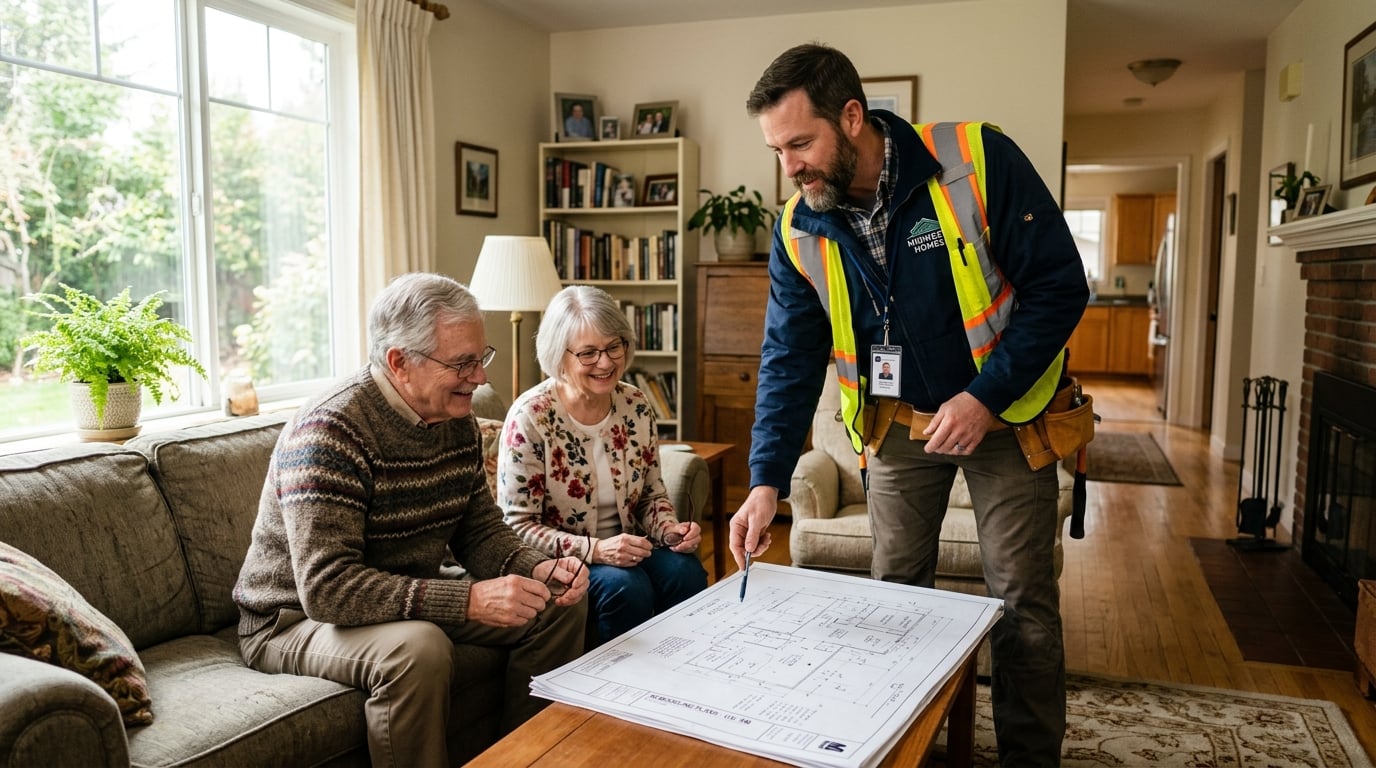
A qualified accessibility contractor can assess your home, recommend the best ramp type, handle permits, and ensure a safe, code-compliant installation. Search for contractors near you on AccessHome Pro to get free quotes from professionals who specialize in wheelchair ramp installation.