When stairs become a barrier to safely using your entire home, two solutions rise to the top: stairlifts and residential home elevators. Both solve the same fundamental problem — getting between floors — but they differ significantly in cost, installation complexity, capacity, and long-term value.
This guide breaks down everything you need to know to make the right choice for your home and situation.
Stairlifts: The Essentials
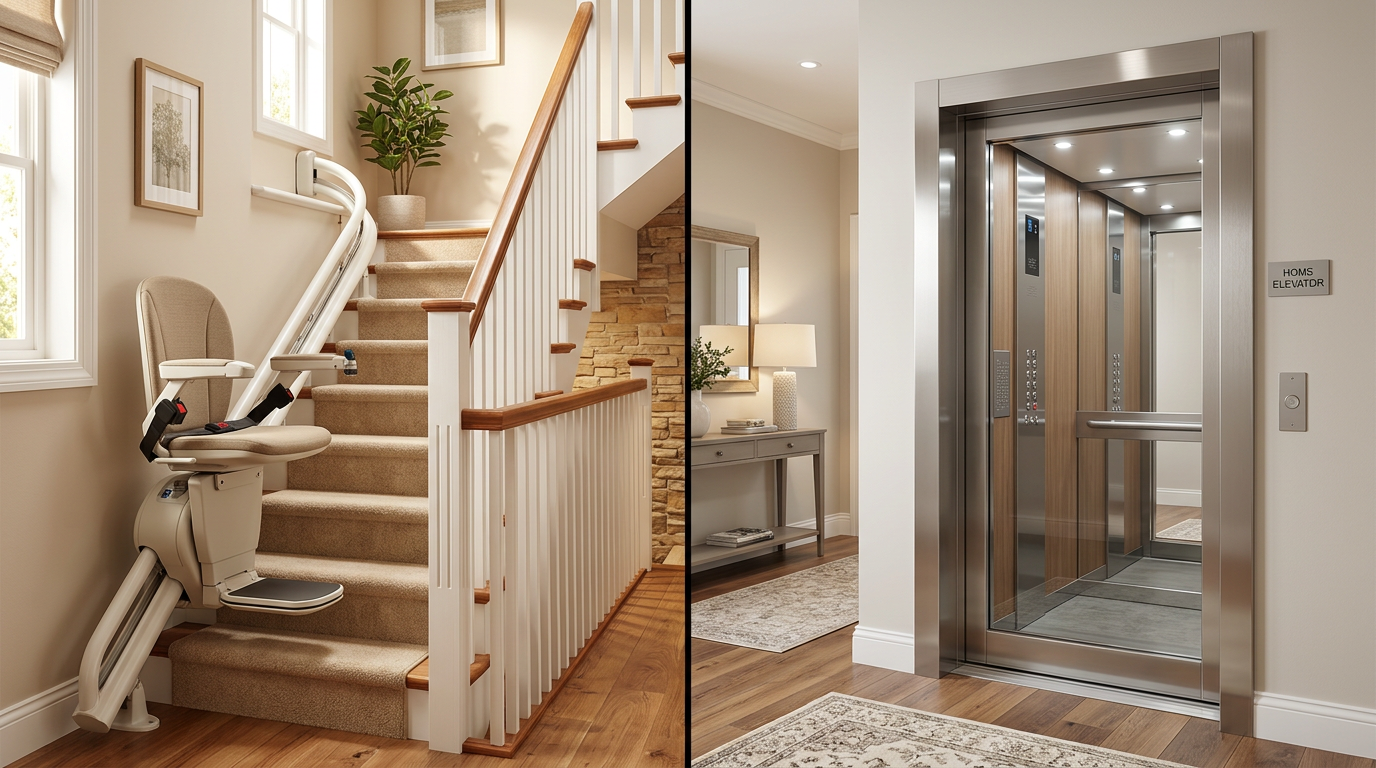
A stairlift is a motorized chair that travels along a rail mounted to your staircase. The user sits in the chair, fastens a seatbelt, and rides up or down at the press of a button. The staircase itself remains fully usable by other household members.
Types of Stairlifts
- Straight stairlifts: For staircases with no turns or landings. The rail is a single straight piece. These are the most affordable and fastest to install — often in under three hours.
- Curved stairlifts: Custom-manufactured rails that follow staircases with curves, turns, or intermediate landings. Because the rail is made to order, lead times are typically 4 to 8 weeks.
- Outdoor stairlifts: Weather-resistant models designed for exterior steps (porches, decks, garden levels). Coated to withstand rain, UV, and temperature extremes.
Stairlift Costs
- Straight: $3,000 to $5,000 installed
- Curved: $8,000 to $15,000 installed (custom rail manufacturing drives the cost)
- Outdoor: $4,000 to $6,000 installed
- Used/refurbished straight: $1,500 to $3,000 (a strong option for budget-conscious buyers)
Stairlift Pros
- Relatively affordable, especially for straight staircases
- No structural changes to the home required — the rail mounts to the stairs, not the wall
- Fast installation (same day for straight models)
- Minimal maintenance (annual service check, battery replacement every 2-3 years)
- Can be removed without lasting damage to the home
- Runs on battery backup, so it works during power outages
Stairlift Cons
- The user must be able to transfer from a wheelchair to the stairlift seat (and back) at each floor
- Not suitable for people who cannot sit upright or hold themselves in a seated position
- Curved models are expensive and have long lead times
- Weight capacity is typically limited to 300-400 pounds
- Does not add significant resale value to the home
Home Elevators: The Essentials
A residential elevator is a small, enclosed cabin that moves vertically between floors through a shaft built into (or added onto) the home. Unlike a stairlift, it accommodates wheelchairs, walkers, and standing passengers — no transfer required.
Types of Home Elevators
- Hydraulic elevators: Use a hydraulic pump and piston to raise and lower the cabin. Smooth, quiet ride. Require a machine room (typically in the basement or an adjacent closet).
- Traction (cable) elevators: Use a motor, cable, and counterweight system. No machine room needed. More energy-efficient than hydraulic models.
- Pneumatic (vacuum) elevators: Use air pressure differentials to move a transparent cylindrical cabin. No shaft, pit, or machine room required. The most visually striking option, but limited to 2-3 stops and lower weight capacity.
- Shaftless elevators: A compact platform that travels through a floor cutout. Designed specifically for residential retrofits where building a traditional shaft is impractical.
Home Elevator Costs
- Hydraulic or traction: $20,000 to $50,000 installed (including shaft construction)
- Pneumatic: $35,000 to $60,000 installed
- Shaftless: $15,000 to $30,000 installed
- Ongoing costs: Annual inspection ($100 to $300), maintenance contract ($200 to $600/year), electricity ($20 to $50/month)
Home Elevator Pros
- Full wheelchair accessibility — no transfers needed
- Higher weight capacity (500 to 1,000+ pounds depending on model)
- Can carry groceries, laundry, and other items between floors
- Adds significant resale value to the home (typically 10-15% of installation cost)
- Can serve 2 to 4 floors
- A long-term solution that accommodates progressing mobility challenges
Home Elevator Cons
- Substantially higher upfront cost
- Requires structural modifications (shaft construction, floor cutouts, electrical upgrades)
- Installation takes 2 to 6 weeks
- Requires annual professional inspection in most states
- May need permits and zoning approval
- Does not operate during power outages (except models with battery backup)
Side-by-Side Comparison
| Factor | Stairlift | Home Elevator |
|---|---|---|
| Cost | $3,000–$15,000 | $15,000–$60,000 |
| Installation time | Hours to 1 day | 2–6 weeks |
| Structural changes | None | Significant |
| Wheelchair accessible | No (requires transfer) | Yes |
| Weight capacity | 300–400 lbs | 500–1,000+ lbs |
| Resale value impact | Minimal | Positive (10-15%) |
| Power outage | Battery backup standard | Varies by model |
| Maintenance | Low | Moderate |
Which Should You Choose?
A stairlift makes sense when:
- The user can safely transfer to and from a seated position
- Budget is a primary concern
- The need may be temporary (post-surgery recovery, for example)
- You do not want to make structural changes to the home
A home elevator makes sense when:
- The user needs to bring a wheelchair between floors
- Multiple household members have mobility challenges
- You want a long-term, future-proof solution
- Resale value is an important consideration
- The home has 3 or more floors
Get Professional Advice
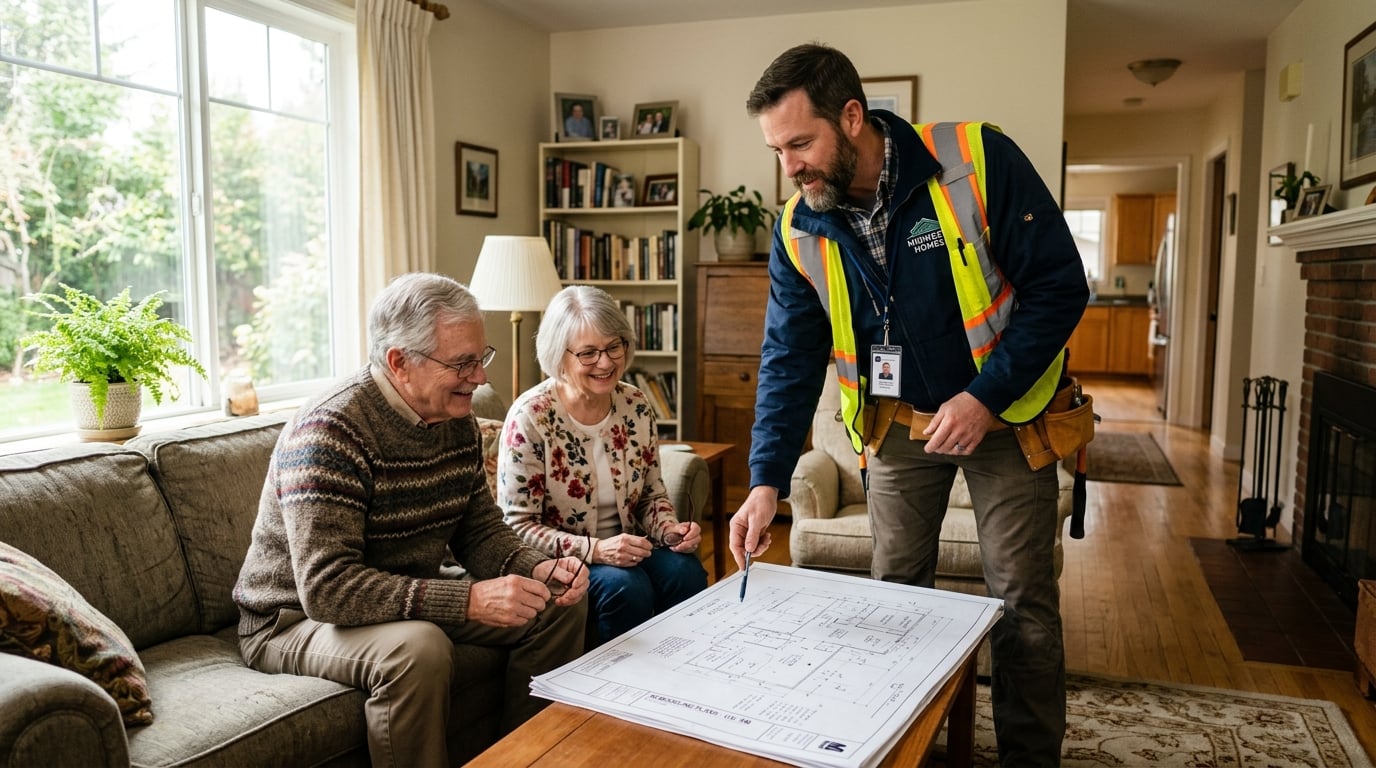
The right choice depends on your home's layout, your current and anticipated mobility needs, and your budget. An experienced accessibility contractor can assess your staircase, discuss both options in detail, and provide accurate quotes. Find a qualified contractor near you on AccessHome Pro to start the conversation.