When researchers ask older Americans where they want to live as they age, the answer is overwhelming and consistent: at home. According to AARP surveys conducted over more than a decade, roughly 77 percent of adults over 50 want to remain in their current residence for as long as possible. Among those 65 and older, the figure climbs to nearly 90 percent.
This preference is not new, but the movement to support it — commonly called "aging in place" — has grown into a major force reshaping housing, healthcare, and the home improvement industry.
What Does "Aging in Place" Mean?
The Centers for Disease Control and Prevention defines aging in place as "the ability to live in one's own home and community safely, independently, and comfortably, regardless of age, income, or ability level." In practice, it means making the physical environment, support systems, and services work so that moving to a facility is a choice rather than a necessity.
The Numbers Tell the Story
The demographic shift driving aging in place is massive:
- 73 million: The number of Baby Boomers (born 1946–1964) now in or approaching retirement age
- 10,000: Americans turning 65 every single day — a pace that will continue through 2030
- 34%: The projected increase in the 65-plus population by 2030 compared to 2020
- $5,000–$9,000/month: The median cost of assisted living in the United States in 2026
- $10,000–$12,000/month: The median cost of a private room in a nursing home
Against those facility costs, even $30,000 to $50,000 in home modifications represents a fraction of one year in assisted living — and the modifications last for decades.
Why Staying Home Matters
Better Health Outcomes
Research consistently shows that older adults who remain in their own homes experience better physical and mental health outcomes. A study published in the Journal of the American Geriatrics Society found that seniors who age in place have lower rates of depression, better cognitive function, and higher self-reported quality of life compared to those in institutional settings.
Familiar surroundings reduce confusion and anxiety — particularly important for people with early-stage dementia. The ability to maintain routines, tend a garden, or cook favorite meals preserves a sense of purpose and identity that institutional living often erodes.
Social Connections
Home is not just a building — it is a network. Longtime neighbors, a familiar church or community center, a favorite walking route, the local grocery store where the staff knows your name. These connections are protective factors against isolation and loneliness, which the Surgeon General has identified as a public health epidemic among older adults.
Financial Advantages
For most homeowners, the house is paid off or nearly so. Monthly costs are limited to property taxes, insurance, utilities, and maintenance. Even after investing in accessibility modifications, remaining at home is dramatically less expensive than facility-based care over any multi-year horizon.
Autonomy and Dignity
Perhaps the most fundamental reason: staying home means staying in control. Choosing when to eat, what to wear, when to sleep, who visits — these everyday freedoms are often the first things lost in an institutional setting. For many older adults, independence is not a luxury; it is central to their identity and well-being.
What It Takes to Age in Place Successfully
Wanting to stay home is not enough — the home itself must be safe and functional as abilities change. Most homes built before 2000 were not designed with aging in mind. Narrow doorways, step-up showers, steep staircases, and poor lighting create hazards that worsen as mobility and vision decline.
The most common modifications that make aging in place work include:
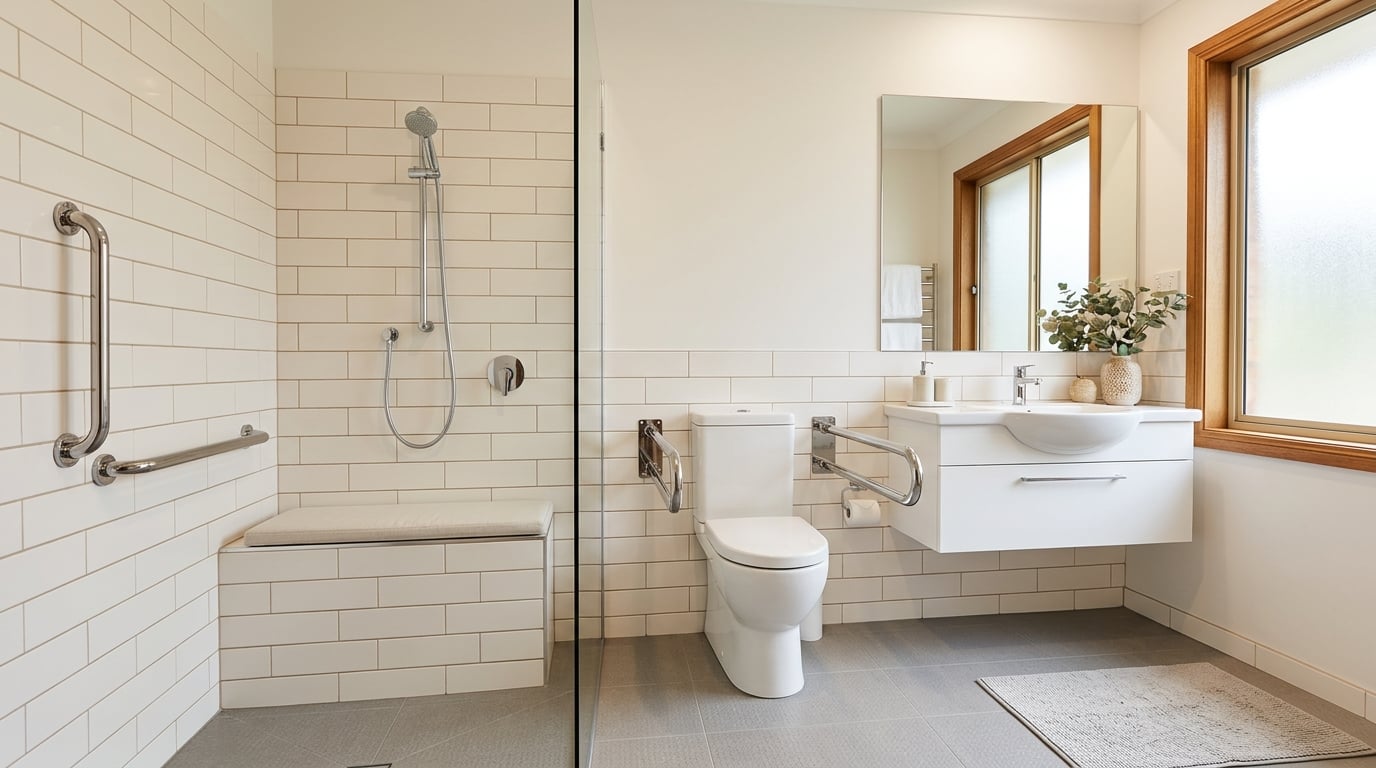
- Bathroom safety upgrades (grab bars, walk-in showers, comfort-height toilets)
- First-floor bedroom and full bath (eliminating the need to use stairs daily)
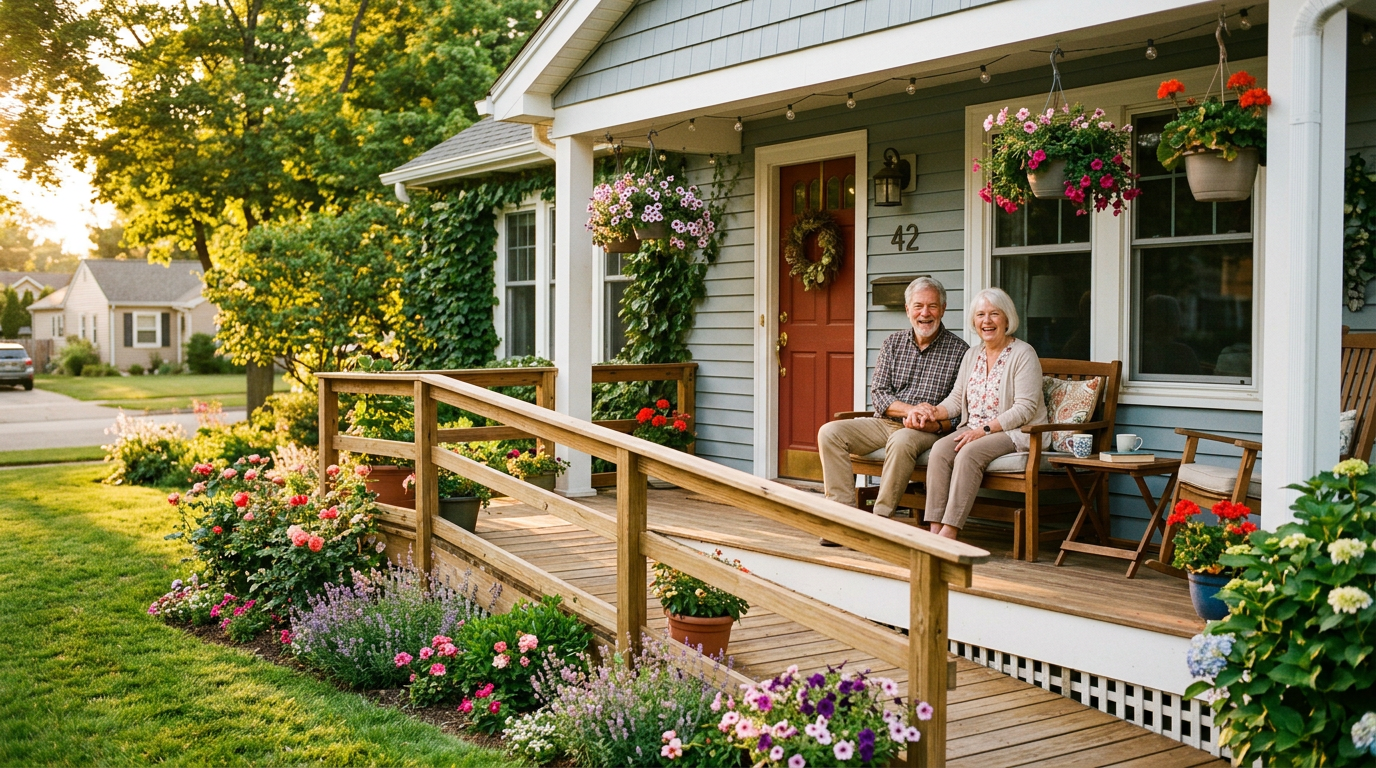
- Wheelchair ramps at entrances
- Wider doorways for walker and wheelchair access
- Improved lighting throughout
- Kitchen accessibility upgrades
- Smart home technology for remote monitoring and voice-controlled systems
The Role of the Community
Aging in place works best when the broader community supports it. Walkable neighborhoods, reliable public transportation, nearby healthcare, senior centers, and meal delivery services all contribute. The "Village" movement — where neighbors organize to share services and mutual support — is one grassroots model that has spread to hundreds of communities across the country.
Start Planning Now
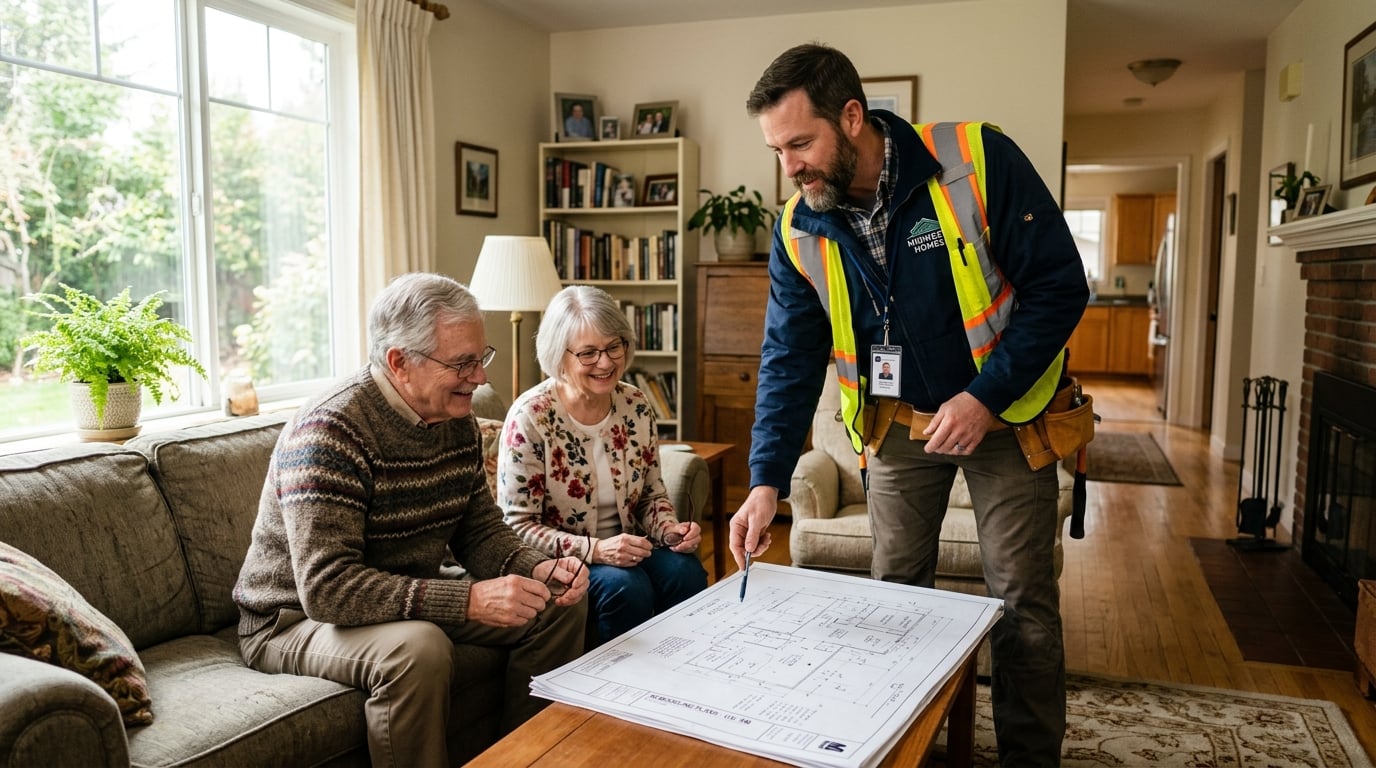
The best time to plan for aging in place is before you need it. A proactive home assessment by a CAPS-certified contractor can identify potential hazards and prioritize modifications. Many changes are surprisingly affordable, and financial assistance is available for those who qualify.
Find an accessibility contractor near you on AccessHome Pro and take the first step toward making your home a place you can enjoy for decades to come.